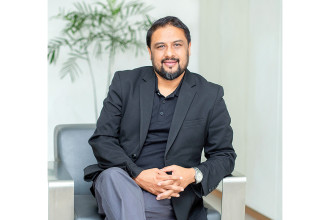
Turning Legacy Into Leverage: Saket Sanghai on Modernising Triveni Group for Nepal’s Next Growth Phase

I feel legacy should be treated as a strength, not as something that slows us down. The values our previous generations built like trust, hard work, resilience and relationships are still very important to us. But the way we do business has to keep evolving. Today, we need stronger systems, professional management, better technology and more data-driven decision-making
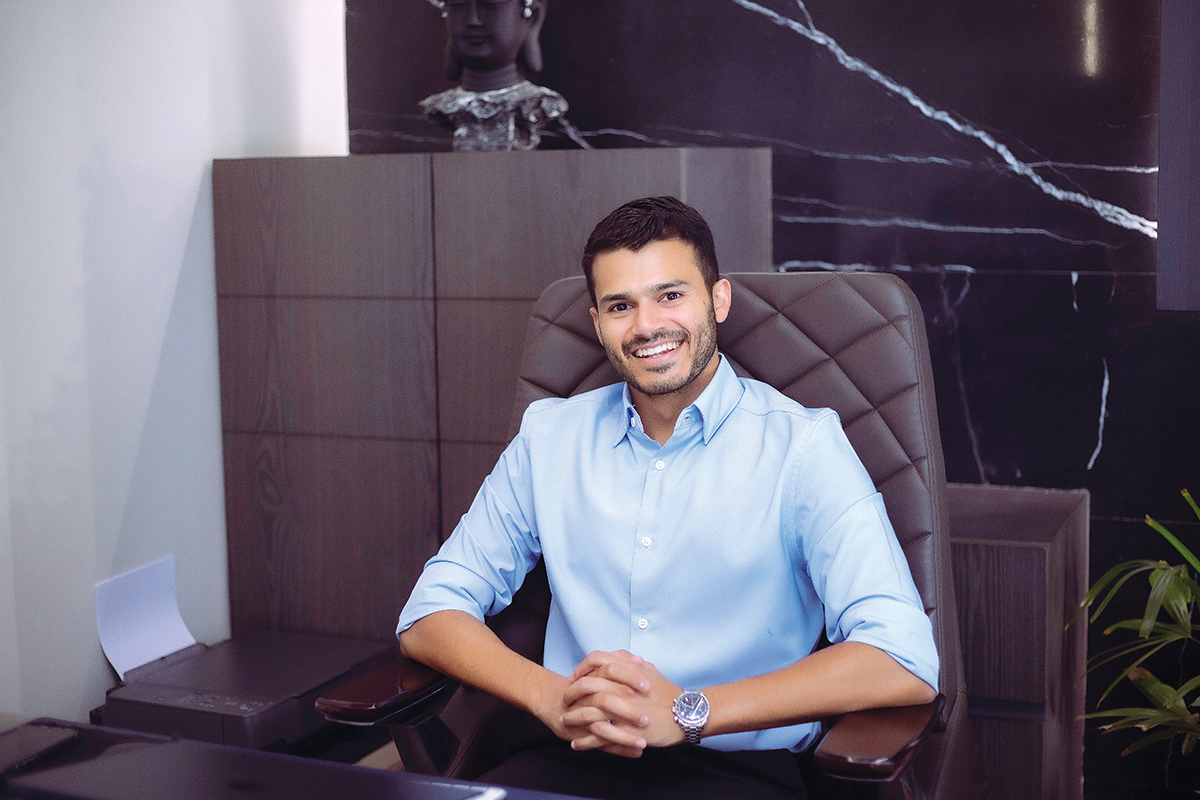
Saket Sanghai, Director, Triveni Group
“Nepal’s next phase of growth will depend on stronger collaboration between the private sector, government and the country’s young professionals,” says Saket Sanghai, Director of Triveni Group. “My long-term goal is to help build institutions that create lasting value, generate quality employment and contribute meaningfully to Nepal’s economic development.”
As part of the next generation of leadership at Triveni Group, Sanghai is focused on driving the organisation’s transformation through greater professionalism, operational excellence and strategic growth. He oversees the Group’s food and commodity businesses, where his priorities include strengthening operational systems, enhancing efficiency, developing high-performing teams and building businesses that are scalable, resilient and future-ready.
Having studied and worked abroad, Sanghai brings an international perspective shaped by global business practices, data-driven decision-making and process-oriented management. Since joining the family enterprise, he has worked to integrate these principles while preserving the values that have defined Triveni Group for decades: trust, long-term relationships, resilience and an enduring commitment to Nepal’s economic progress.
In this edition of Business 360, Sanghai discusses leadership across generations, modernising a legacy business, navigating change in Nepal’s evolving economy and his vision for building institutions that create sustainable long-term value.
Triveni Group has diversified across multiple sectors over the decades. How do you identify emerging industries and decide where to invest next?
At Triveni Group, we have never looked at diversification as simply entering the ‘next big thing’. We try to understand where Nepal is heading, what the market genuinely needs, and where we can build something meaningful for the long term. If we feel that a sector has scale, relevance and that we can add real value through our execution, capital and team, then we look at it seriously.
How are digital transformation and new technologies influencing the way Triveni Group operates across its businesses?
Technology is changing the way we look at our businesses. For a diversified group like ours, better systems and data are extremely important because they help us make faster and more informed decisions. We are focusing more on MIS, automation, data-driven decision-making and process improvement so that our teams can work with more clarity, accountability and efficiency.
As a leader of a large and diversified conglomerate, what leadership principles guide your decision-making process?
For me, the most important principle is to think long term but execute with discipline every day. In a group like ours, every decision has to be practical, financially sound and aligned with the larger vision. I also believe strongly in people because no business can grow only through the promoters. You need strong teams, clear responsibilities and trust.
How do you balance preserving the legacy and values of a long-established family business while embracing change and modernisation?
I feel legacy should be treated as a strength, not as something that slows us down. The values our previous generations built like trust, hard work, resilience and relationships are still very important to us. But the way we do business has to keep evolving. Today, we need stronger systems, professional management, better technology and more data-driven decision-making.
What qualities do you believe are most important for the next generation of business leaders in Nepal?
I think the next generation of business leaders in Nepal needs to be ambitious but also very responsible. We have to think beyond short-term opportunities and focus on building real businesses that create jobs, improve productivity and add value to the country. Adaptability, integrity, execution and openness to learning are going to be very important.
What strategies do you use to attract, retain and motivate talented professionals within the organisation?
Good people want to feel that they are part of something meaningful. So, for us, it is important to give professionals clarity, ownership, respect and room to grow. We are working on stronger systems, clearer KPIs and better structures so that people understand their role and can see how their work contributes to the larger growth of the group.
How important are strategic partnerships and collaborations to Triveni Group’s long-term vision?
Partnerships have always been very important for us. The right partner brings knowledge, technology, products and global best practices, while we bring local market understanding, relationships, capital and execution. I believe the future will require even more collaboration, especially as industries become more technology-driven and globally connected.
What opportunities do you see for greater cooperation between Nepal’s private sector, government and academia to drive economic growth?
There is a lot more that can be done if the private sector, government and academia work together with a common purpose. The private sector understands market needs, the government can create the right policy environment, and academia can prepare young people with practical skills. If these three work closely, Nepal can create more jobs, stronger industries and better opportunities at home.
Triveni Group works with numerous national and international partners. What makes a partnership successful in your experience?
In my experience, a good partnership works when there is trust, clarity and alignment from the beginning. Both sides must respect what the other brings to the table. It is also important to be transparent about expectations and responsibilities. A true partnership is tested not only when things are going well but also when challenges come.
What has been the most valuable leadership lesson you have learned throughout your career?
One lesson I have learned is that execution matters more than intention. Many people have good ideas but the real challenge is converting those ideas into results. Leadership is also about staying calm during difficult moments, asking the right questions, taking responsibility and building a team that can move together in the same direction.
Nepal’s economy is undergoing significant changes. What opportunities and challenges do you foresee for the country’s business environment over the next decade?
I remain very optimistic about Nepal’s potential. We have opportunities in hydropower, tourism, manufacturing, clean mobility and digital services. But to unlock this potential, we need more policy stability, better infrastructure, a lower cost of doing business and stronger talent retention. The next decade can be very important if we are able to create a more investment-friendly environment.